
TANRUB · PRODUCT GUIDE
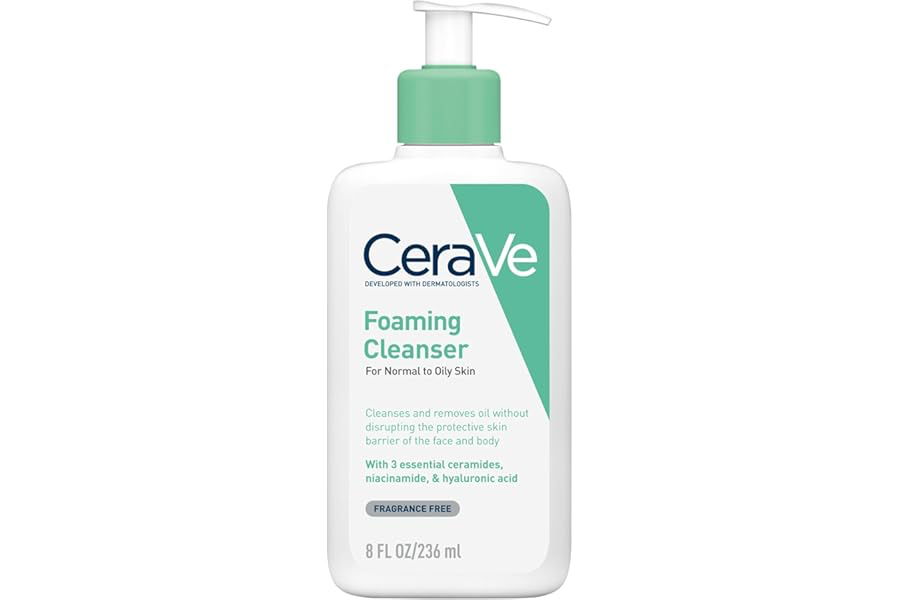
CeraVe Foaming Cleanser
CeraVe Foaming Cleanser is a gel wash for normal-to-oily skin. This guide examines the bottle and refill reference declarations, the difference between removing surface oil and changing sebum production, and the research limits behind ingredient-based claims.
Research checked 13 October 2026. Source-based guide; no personal product test. As an Amazon Associate I earn from qualifying purchases.
Quick verdict
Compare it when you want a rinse-off foaming gel without declared parfum. Decide on the exact bottle or refill before comparing ingredients and cost. Niacinamide is present, but its concentration and the cleanser’s clinical oil-control effect are not supplied. It should not inherit a moisturiser’s study results or another CeraVe cleanser’s acne-active strength.
Identity and pack
| Item | Reference |
|---|---|
| Format | Gel to foam; wash off |
| Brand positioning | Normal-to-oily skin, face and body |
| Australian bottle options | 236ml and 473ml references |
| Selected seller size | Not independently verified; original Tanrub record says check current pack |
| Reference codes | Bottle D250310/1; refill D250309/1 |
A range page offering several sizes does not establish the selected Amazon offer. Do not infer a multipack from a photograph, and do not replace the recorded unspecified size with a size found on another country’s ASIN record.
Full Australian bottle reference formula
Aqua/Water, Cocamidopropyl Hydroxysultaine, Glycerin, Sodium Lauroyl Sarcosinate, Propanediol, PEG-150 Pentaerythrityl Tetrastearate, Niacinamide, PEG-6 Caprylic/Capric Glycerides, Ceramide NP, Ceramide AP, Ceramide EOP, Carbomer, Sodium Methyl Cocoyl Taurate, Sodium Benzoate, Sodium Chloride, Sodium Lauroyl Lactylate, Sodium Hyaluronate, Cholesterol, Phenoxyethanol, Disodium EDTA, Citric Acid, Tetrasodium EDTA, Phytosphingosine, Xanthan Gum, Ethylhexylglycerin.
Manufacturer reference 2021513 23, F.I.L. D250310/1. This is the website declaration, not a laboratory analysis of your bottle.
Sources: 1
Refill declaration: keep the difference visible
The Australian Eco-Recharge page has a different reference code, D250309/1. Its list places Sodium Chloride immediately after PEG-6 Caprylic/Capric Glycerides; the bottle page places it after Sodium Benzoate. The same named ingredients are otherwise present, allowing for water-name formatting and a webpage spelling variation.
Matching names do not establish identical percentages or manufacturing specifications. Use the offered pack’s panel. Neither code can establish which formula an older seller bottle contains. A bottle-versus-refill comparison is therefore a pack and label check rather than a promise of identical formulation.
What the formula establishes
| Declaration clue | Product-specific limit |
|---|---|
| Niacinamide | Present; no concentration is disclosed. Do not assume 2%, 5% or 10%. |
| Ceramide NP, AP and EOP; cholesterol; phytosphingosine | Lipid-related ingredients are named, but their ratio and retained post-rinse quantity are unverified. |
| Glycerin, propanediol and sodium hyaluronate | Moisture-related ingredients do not provide a measured hydration duration. |
| Hydroxysultaine, sarcosinate and taurate | Part of the cleansing system. Foam alone cannot measure cleanliness or irritation. |
| No parfum, salicylic acid or benzoyl peroxide named | Matches a general cleansing format; it is not a verified medicated BHA or benzoyl-peroxide wash. |
| Preservatives and other supporting ingredients | Read the full declaration when avoiding a known trigger; fragrance-free is not an allergy guarantee. |
Ingredient presence helps identify a formula. It does not calculate how much oil is removed or establish the response of a person with acne, eczema or rosacea.
Claims and clinical evidence audit
CeraVe describes cleansing and excess-oil removal while supporting the moisture barrier, with non-comedogenic, fragrance-free and allergy-tested positioning. The retrieved product reference does not give a complete clinical protocol, effect size or uncertainty interval for these finished-product claims.
No exact-bottle trial proving a fixed reduction in sebum production, acne lesions or pore size was established here. Cleansing surface oil is a different endpoint from reducing sebaceous-gland output. A popularity snapshot or customer rating cannot establish either effect.
The bottle page mentions Eczema Association of Australasia support. Treat that as the manufacturer’s stated endorsement; it does not supply an eczema-treatment trial or guarantee tolerance of every imported pack.
Sources: 1
Niacinamide oiliness research
Draelos and colleagues studied a 2% niacinamide moisturiser, not this rinse-off cleanser. In Japan, 100 people were assigned to niacinamide or placebo moisturisers for four weeks; sebum excretion fell in the niacinamide group after two and four weeks. In a separate six-week, 30-person US split-face study, casual surface sebum decreased but sebum excretion did not significantly decrease.
The distinction between the two oil measurements matters. The studies do not establish a uniform effect across populations, and the cleanser’s niacinamide dose, vehicle and contact time differ or remain unknown. These findings cannot support a claimed percentage of all-day oil control for CeraVe Foaming Cleanser.
Sources: 3
Research on washing frequency
A 2006 single-blind randomised study in men with mild-to-moderate acne compared washing once, twice or four times daily for six weeks after a two-week twice-daily run-in. It used a standard mild cleanser; it was not a trial of this CeraVe product.
There were no significant between-group differences at study end. Some within-group acne measures improved with twice-daily washing, while the once-daily group worsened on certain measures. The authors described modest support for twice-daily washing. That is not evidence that every oily-skin user benefits from four washes or that a cleanser replaces acne treatment.
Sources: 4
How to use the gel
- Wet the face or body with lukewarm water.
- Gently massage the gel in circles to form a lather.
- Rinse the cleanser away.
- Follow the actual bottle’s warnings and directions.
No fixed contact time, pump output or gram dose was established for the selected seller stock. More pressure and prolonged rubbing are not verified ways to increase benefit. The refill reference warns against eye contact and directs thorough water rinsing if contact occurs.
Sources: 2
Routine frequency and tolerance
AAD recommends a gentle, non-abrasive cleanser, fingertip application, avoiding scrubbing, and generally washing up to twice daily and after heavy sweating. This is general dermatology guidance, not a CeraVe-specific optimal-dose trial.
Use comfort and your clinician’s instructions when choosing frequency. Persistent tightness, stinging, peeling or redness warrants reassessment. Do not treat a strong squeaky-clean sensation as a validated measurement of pore cleansing or skin health.
A moisturiser can be useful after cleansing if skin is dry or itchy. This wash is a rinse-off step, not a leave-on moisturiser or sunscreen.
Sources: 5
Makeup and sunscreen removal
The brand positions the wash for everyday impurities and makeup. No universal removal percentage for waterproof makeup or every current sunscreen was established. If removal requires repeated rubbing, compare a dedicated remover and method rather than automatically increasing gel contact time.
Adding a first-step oil or micellar cleanser is a separate decision. Compare the actual sunscreen or makeup, remaining residue and skin comfort. A two-step sequence is not established as necessary merely because the product produces foam.
Refill handling and storage
The manufacturer’s refill instructions say to wash hands, pour into the designated bottle without touching openings, replace the pump and avoid forceful squeezing. It advises against rinsing the bottle with water before refilling and recommends replacing it after three refills. Check the delivered pack’s compatibility and instructions.
The refill page advises cool, dry storage away from direct sunlight and closing the pouch after opening. That is not a verified numerical temperature or universal expiry rule for every bottle. Follow the actual batch date, expiry and opening-period symbol.
Environmental and price comparisons need their stated comparator. A plastic-saving percentage against two small bottles is different from a comparison against one large bottle. Neither establishes the current delivered price.
Sources: 2
pH, shelf life and individual reactions
No numerical batch pH, universal after-opening duration, exact expiry or concentration of ceramides and niacinamide was verified. Do not borrow specifications from Hydrating Cleanser, Cream-to-Foam or Balancing Air Foam.
Read the full panel for your known triggers. FDA notes that cosmetics can cause allergic reactions and that ingredient checking matters more than relying only on sensitivity-related marketing. Stop use if a persistent rash develops; an informal spot trial does not diagnose allergy or guarantee later tolerance.
Sources: 6
Buying and value comparison
| Check | Reason |
|---|---|
| Exact Foaming range | Cream-to-Foam, Hydrating and Balancing Air Foam are separate products. |
| Bottle or refill and actual millilitres | Establish denominator before calculating cost per 100ml. |
| Unit count and total delivered cost | Formula: price ÷ total millilitres × 100. |
| Current ingredient panel and code | Compare the two references rather than merging them. |
For verified 236ml and 473ml offers, divide delivered price by 2.36 and 4.73 respectively to calculate cost per 100ml. These examples do not assert the selected ASIN’s current size.
Related cleansers and common questions
Hydrating Cream-to-Foam 236ml has a separate formula and includes salicylic acid in its reference list. Hydrating Cleanser is a separate non-foaming option. Blemish Control Cleanser requires its own active-strength and direction checks.
Does Foaming Cleanser contain niacinamide? Yes; its percentage is not verified.
Is it a salicylic-acid acne wash? Salicylic acid is not named in the reviewed bottle declaration.
Are the bottle and refill lists identical? The named ingredients match, but sodium-chloride position and formula codes differ.
Can I use it on my body? The brand positions it for face and body; follow the delivered directions.
Will it stop every breakout? No verified finished-product outcome establishes that guarantee.
Evidence gaps and source record
The selected seller’s size, batch formula, numerical pH, active concentrations, shelf-life rules and exact-product clinical effects remain unverified. The reference declarations and broader research are labelled rather than turned into promised results.
- CeraVe Australia: Foaming Cleanser bottle — full declaration and range references.
- CeraVe Australia: Eco-Recharge refill — different code, ingredient order and handling.
- Draelos et al., 2006: 2% niacinamide and facial sebum — primary moisturiser studies; DOI 10.1080/14764170600717704.
- Choi et al., 2006: face-washing frequency — primary controlled study, different cleanser; DOI 10.1111/j.1525-1470.2006.00276.x.
- AAD: Face washing 101 — general guidance.
- FDA: allergens in cosmetics — individual label and trigger checks.
Checked 13 October 2026. Original product identity, ASIN and image retained from Tanrub’s supplied catalogue. No personal testing or independently inspected seller bottle is claimed.